Bank of England Holds Rates at 3.75% (June 2026): A Macroeconomic Breakdown

Updated: Oct 12
*The Bank of England's recent decision to keep interest rates frozen at 3.75% highlights the ongoing struggle between controlling stubborn inflation and avoiding a recession. Here is what every Economics student needs to know.*
📰 The News Summary
In late June 2026, the Bank of England’s Monetary Policy Committee (MPC) voted 7-2 to hold the base interest rate steady at 3.75%. Despite expectations from some financial markets that rates would be cut to stimulate economic growth, the central bank opted for a "wait-and-see" approach.
The primary reason for this cautious stance is persistent UK inflation, which stood at 2.8% in May. Chief Economist Huw Pill warned against complacency, noting that energy costs remain highly volatile due to ongoing geopolitical conflicts in the Middle East. The two dissenting MPC members actually voted for a 0.25 percentage point hike, signaling that the fight against inflation is far from over.
📉 The Economic Theory Applied
This news event is a textbook example of Monetary Policy in action and the delicate balance central banks must strike.
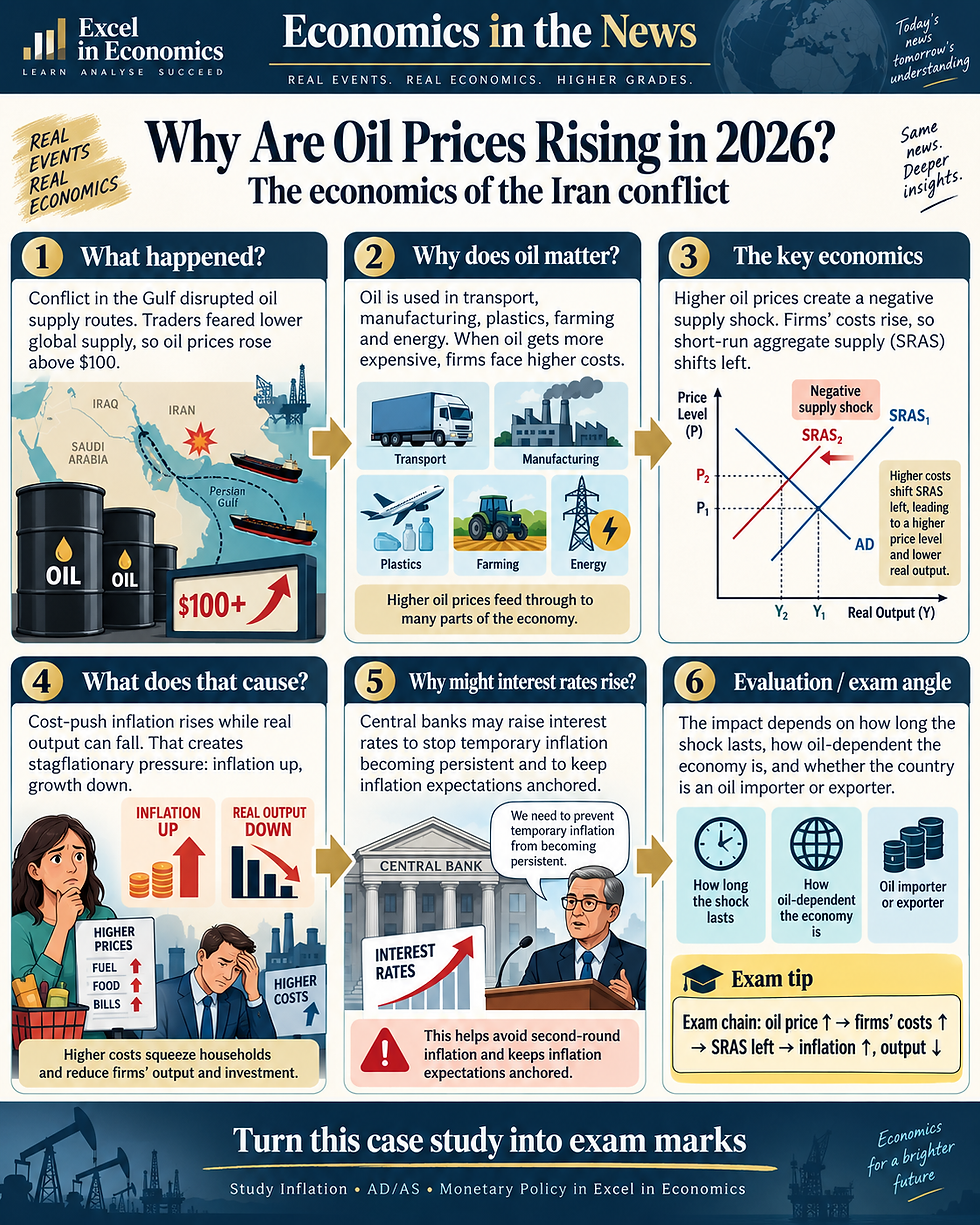
Currently, the UK is facing Cost-Push Inflation driven by external supply shocks (Middle East energy volatility). When energy prices rise, the Short-Run Aggregate Supply (SRAS) curve shifts to the left, causing the general price level to rise and real GDP to fall.
By keeping interest rates high at 3.75% (rather than cutting them), the Bank of England is maintaining a Contractionary Monetary Policy stance.
Higher borrowing costs: Mortgages and business loans remain expensive, reducing Consumption (C) and Investment (I).
Increased saving: Higher reward for saving incentivizes consumers to delay spending.
The Result: Aggregate Demand (AD) is constrained, preventing "demand-pull" inflationary pressures from adding to the existing "cost-push" problems.

📝 How to Use This in Your Exams
For A-Level (CIE/Edexcel/AQA) and IB students, this is a perfect, up-to-date real-world example to use in your essays.
As an example of: Central Bank Independence and Contractionary Monetary Policy.
Evaluation Point 1 (Conflict of Objectives): The BoE is prioritizing Price Stability (keeping inflation near the 2% target) at the potential cost of Economic Growth. High rates constrain AD, which could lead to higher unemployment or a recession.
Evaluation Point 2 (Limits of Monetary Policy): Interest rates are a demand-side tool. They are highly ineffective at solving Cost-Push inflation caused by global energy shocks. The BoE cannot control oil prices in the Middle East, meaning holding rates high inflicts pain on domestic consumers without solving the root cause of the inflation.
Keep studying in the free Economics Portal
Go from this guide into syllabus-mapped revision notes, targeted practice and worked explanations — free to start.